News

Construction
04/09/2026
·
Time
min.


At Fernández Molina we have spent years building, rehabilitating and bringing buildings in Madrid back to life. That is why we are especially interested in how the city itself tells the story of its evolution through architecture.
This month we recommend two exhibitions that, from very different perspectives, talk about where we come from and how our way of building and intervening in existing buildings is evolving. One looks at Madrid's recent past through photography; the other covers fifty years of architectural rehabilitation in Spain.
Two ways of approaching the same idea: building is also a way of interpreting time.
Madrid en construcción, 1940-1985
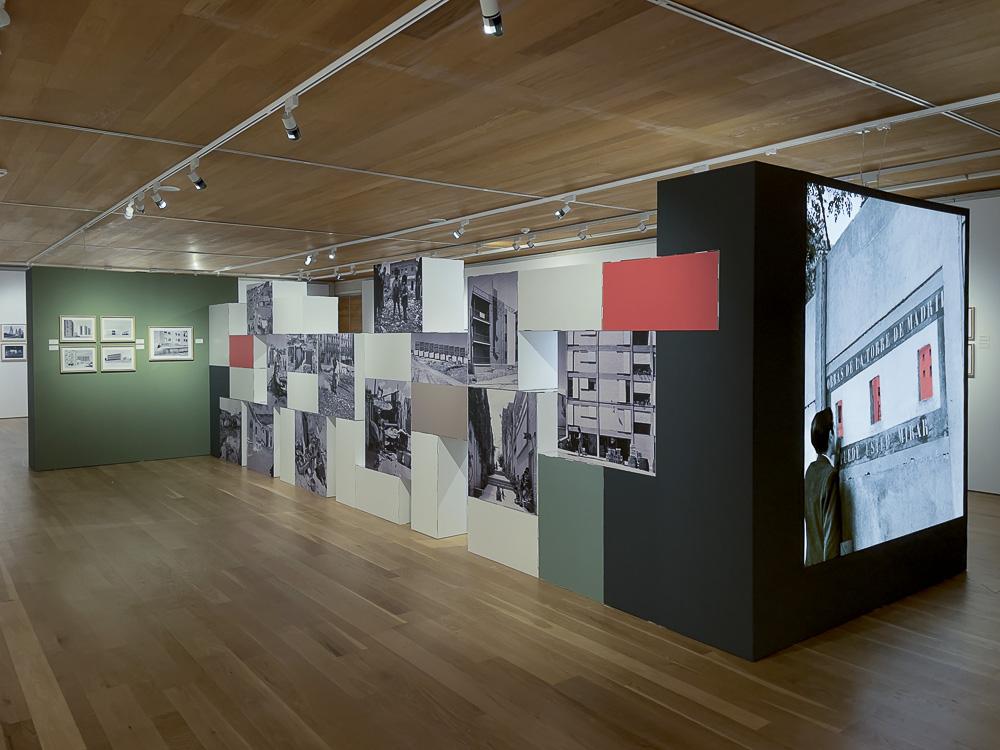
At the Sala Cristóbal Portillo in El Águila (C/ Ramírez de Prado, 3), until 22 September, visitors can see Madrid en construcción, 1940-1985, a visual map of the capital's growth during the second half of the 20th century.
The exhibition brings together photographs by Juan Pando Barrero, Otto Wunderlich and Martín Santos Yubero documenting some of the most significant moments in Madrid's urban transformation: empty plots turning into neighbourhoods, structures rising out of the mud and a still-rural landscape coexisting with a city in full metropolitan expansion.
It lets us see, almost in real time, how much of the Madrid we live in today was built. But also something less obvious: the processes, structures and intermediate stages that usually disappear once a building or a city is considered finished.
The exhibition puts the process of building in the foreground, not just its result.
Radical Rehab. Arquitectura y Patrimonio en España (1975-2025)
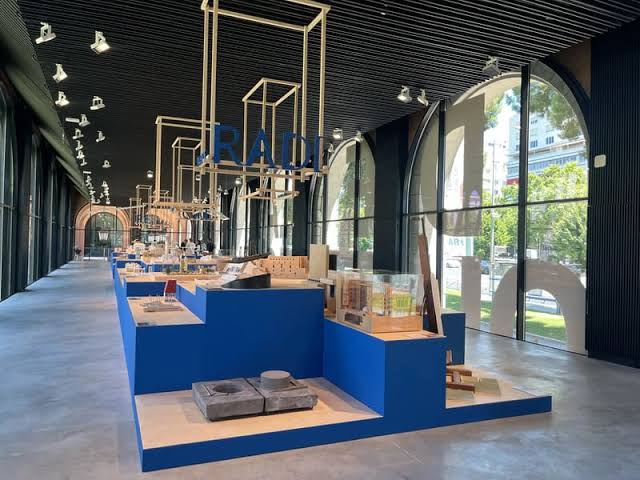
At La Arquería de Nuevos Ministerios – Casa de la Arquitectura, until 28 March 2027, visitors can see Radical Rehab. Arquitectura y Patrimonio en España (1975-2025), an exhibition organised by the Casa de la Arquitectura that brings together eighty rehabilitation projects carried out in Spain over the last five decades.
The exhibition explores how intervention in built heritage has evolved from a strategy focused mainly on conservation into a tool capable of responding to today's environmental, social and functional challenges.
Cultural, educational, religious and administrative buildings, together with public spaces, industrial complexes and housing, show the diversity of scales and contexts in which rehabilitation has become an essential discipline of contemporary architecture.
A particularly relevant reflection at a time when building also means knowing how to work with what already exists: understanding a structure, recognising what deserves to remain and finding a way to adapt it to new needs without losing its identity.
Building on what is already built
Two exhibitions and two different moments of the same city. One shows how Madrid took shape; the other considers how architecture can keep evolving when the starting point already exists.
Between them lies a question closely linked to our way of understanding construction: every building belongs to a moment, a context and a history that must be understood before intervening.
Because building with a vision of the future also requires knowing how to read what came before.
If you are as interested in architecture and the city as we are, these two exhibitions are a good way to start the autumn.